What Recovery Looks Like After Stem Cell Therapy
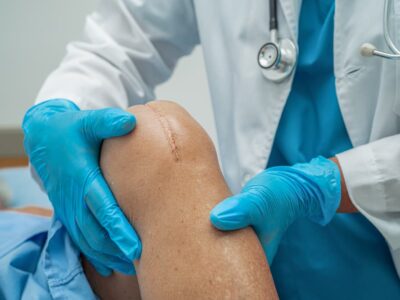

Recovery after stem cell therapy is rarely dramatic in the way many people imagine. Most patients are not wheeled out transformed, and most clinicians do not expect a sudden turnaround. What usually happens is quieter than that. There is a treatment day, then a stretch of waiting, then a gradual sorting out of what is post-procedure soreness, what is normal healing, and what may be a meaningful response.
That quiet period matters because expectations around stem cell therapy are often poorly calibrated. Some people assume it works like a steroid injection, with relief in days. Others fear a long, difficult recovery similar to major surgery. In reality, recovery depends on what kind of stem cell therapy was done, where the cells were placed, what problem was being treated, and whether there was any additional procedure performed alongside it, such as joint aspiration, tissue harvesting, or image-guided injection.
A person treated for knee osteoarthritis can have a very different recovery from someone receiving hematopoietic stem cell transplantation for a blood disorder. Even within orthopedic and sports medicine settings, a stem cell injection into a worn tendon behaves differently from treatment directed at an arthritic joint. The biology is not identical, so the recovery timeline should not be either.
The first distinction that changes everything
When people say "stem cell therapy," they may be talking about very different treatments. That is the first thing to get straight, because recovery cannot be discussed honestly without it.
In regenerative orthopedics, stem cell therapy often refers to a same-day procedure using a patient's own cells, commonly taken from bone marrow aspirate or adipose tissue, then processed and injected into a target area such as a knee, hip, shoulder, tendon, or spine-related structure. This is generally outpatient care. The person https://jaidenpzjn084.timeforchangecounselling.com/stem-cell-therapy-for-tmj-disorders-innovative-relief-options goes home the same day. Recovery is usually measured in days to weeks at first, then months as the tissue response unfolds.
In hematology and oncology, stem cell transplantation is a far more intensive medical event. It may follow chemotherapy or radiation, involve hospitalization, and require close monitoring for infection, immune suppression, graft-related complications, and prolonged fatigue. Recovery in that setting can stretch across many months, and sometimes longer.
Because the title here is broad, it is worth saying plainly that these are not interchangeable experiences. Most casual online searches mix them together, which confuses patients. If your physician uses the phrase stem cell therapy, ask what cells are being used, how they are obtained, where they are delivered, and what sort of recovery curve is realistic for your specific case.
What the treatment day usually feels like
In outpatient musculoskeletal care, the day of treatment tends to be more procedural than dramatic. If bone marrow is being collected, the harvest site, often around the pelvis, may be sorer than the place being treated. That surprises people. They come focused on the arthritic knee or irritated tendon and then discover the donor site is what complains the loudest for the next day or two.
If the treatment uses a needle under ultrasound or fluoroscopic guidance, the target area may feel full, pressurized, achy, or inflamed afterward. Some patients describe it as a deep bruise. Others compare it to the soreness after an aggressive workout in a body part that was already unhappy to begin with. The area can feel worse before it feels better. That does not necessarily mean something has gone wrong. It often reflects the fact that the tissue has been entered with a needle, fluid has been introduced, and the body is mounting an early healing response.
Sedation, if used, can blur the rest of the day. Local anesthetic can make the first several hours deceptively comfortable, then soreness emerges later that evening. Many patients do best when someone drives them home and they keep the rest of the day light, even if the procedure itself seemed straightforward.
In transplant settings, treatment day and the surrounding period can be much more medically demanding. The patient may already be tired from preparatory therapy. Symptoms can include nausea, weakness, poor appetite, mouth soreness, and extreme fatigue, and the recovery course is closely tied to blood counts, infection risk, and organ function. That is a different clinical world, and the support needs are correspondingly different.
The first week is often about protection, not progress
This is the stage where people are most likely to overinterpret every sensation. They want to know, immediately, whether the therapy worked. Usually, there is no reliable way to know yet.
For orthopedic stem cell therapy, the first several days are often centered on controlling irritation and avoiding unnecessary strain. The treated area may be deliberately protected with modified weight-bearing, a sling, or temporary activity restrictions. The reason is simple. Even if the procedure is minimally invasive, the tissue still needs a calm environment. A patient who receives an injection into a degenerated tendon and then returns to heavy lifting or pickleball too soon may stir up the area enough to make the early recovery rougher and the outcome less predictable.
Pain in this first phase can be tricky to read. Mild to moderate soreness is common. Stiffness after sitting is common. Temporary swelling may occur, especially in joints. Some people have a brief inflammatory flare. A smaller group feels almost nothing at first and then wonders whether the treatment did anything. Both patterns can be normal.
Clinicians who do a lot of this work spend time separating expected discomfort from warning signs. Increasing redness, drainage, fever, rapidly worsening swelling, severe unrelenting pain, or a clear loss of function beyond what was anticipated deserve prompt medical review. Most recoveries are uneventful, but after any invasive procedure, vigilance matters.
Why recovery can feel slower than patients expect
One reason recovery after stem cell therapy feels mentally difficult is that the timeline does not reward impatience. You are waiting on biology, not just symptom suppression. Anti-inflammatory treatments can quiet pain quickly because that is their main effect. Regenerative procedures ask the body to do something harder. It has to repair, remodel, and integrate change in tissue that may have been damaged for months or years.
That is why many clinicians quote broad windows rather than exact dates. In joint conditions, some patients notice early improvement within a few weeks, but more meaningful changes often take several weeks to a few months. In tendon problems, the timeline can be even longer, because tendon tissue remodels slowly. Early pain relief does not always mean durable healing, and delayed improvement does not necessarily mean failure.
Age, general health, sleep quality, metabolic disease, smoking status, medication use, and the severity of the underlying condition all influence recovery. So does mechanics. A person with knee arthritis who continues walking with poor hip strength and a collapsing gait pattern may not get the same benefit as someone who pairs the procedure with smart rehabilitation. Biology and biomechanics are partners here. Ignoring one usually blunts the other.
The middle phase, where rehab starts to matter
Once the immediate soreness settles, recovery shifts from protection to guided loading. This is where outcomes often separate. Patients who treat stem cell therapy as a stand-alone fix can miss the bigger picture. The procedure may create an opportunity, but rehabilitation helps the body use it.
For a knee, that may mean restoring range of motion, improving quadriceps activation, building hip strength, and gradually increasing walking tolerance. For a shoulder, it may involve scapular control, rotator cuff loading, and retraining overhead movement without compensations. For a tendon, the rehab may be very deliberately progressive, because too little loading can leave tissue underprepared while too much can provoke symptoms.
This middle phase tends to be less dramatic and more disciplined. People often have a few encouraging days, then a mild setback after doing more around the house, returning to the gym, or sitting too long during travel. That up-and-down pattern is common. Good recovery is not always linear. The key question is whether the trend over several weeks is improving, even if individual days vary.
One of the more useful ways to frame it for patients is this: judge recovery in chapters, not moments. If week six is better than week two, and month three is better than month one, that matters more than whether Tuesday was worse than Monday.
What patients commonly notice as they improve
The earliest signs of meaningful recovery are often practical rather than dramatic. A person may realize stairs are less annoying. They may stand from a chair with less bracing. Morning stiffness may shorten from forty minutes to fifteen. A shoulder may still ache overhead, but reaching into a cabinet is easier. A runner may not be ready to train, yet notices less soreness the day after a long walk.
Those are useful signals because they reflect function, not wishful thinking. Pain scores alone can be misleading. Someone may still rate discomfort as a five out of ten but be sleeping better, walking farther, and relying less on medication. Clinically, that is progress.
Anecdotally, one pattern shows up often in musculoskeletal care: patients can get discouraged at the four to six week mark because they expected more by then, only to feel noticeably better around eight to twelve weeks. That does not happen for everyone, and some conditions improve more slowly, but it is common enough that experienced clinicians mention it early. The waiting is easier when people know the timeline is measured in months, not days.
Recovery is different for joints, tendons, and spine-related pain
Joint recovery often centers on swelling, stiffness, and load tolerance. Arthritic knees and hips may respond with gradual gains in comfort and function, especially when walking volume and exercise are progressed carefully. The challenge is that arthritic joints can also be influenced by weather, weight changes, travel, and overuse, so week-to-week variability is common.
Tendon recovery tends to be less forgiving. Tendons dislike chaos. They do best with progressive, structured loading. Patients often feel improved at rest before the tendon is actually ready for higher-demand tasks such as sprinting, jumping, or repetitive overhead work. That gap is where reinjury risk lives.
Spine-related procedures are their own category. If stem cell therapy is used around discs, facet joints, or related structures, recovery can be harder to interpret because back pain is multifactorial. A person may have disc degeneration, facet irritation, weak trunk endurance, and hip mobility deficits all at once. Procedure-related soreness can temporarily blur the picture. When it works, improvement is often noticed as better sitting tolerance, easier transfers, fewer sharp catch pains, or less next-day flare after ordinary activity.
What can slow recovery down
Some delays are biological. Advanced tissue degeneration, chronic inflammation, poor circulation, or significant mechanical wear can all make progress slower and less complete. Some delays are behavioral. People return to impact sports too soon, skip rehabilitation, sleep poorly, continue nicotine use, or treat every good day as proof they are fully healed.
The more difficult truth is that some patients are simply not ideal candidates for a strong response. If a joint is severely deformed, unstable, or close to end-stage degeneration, stem cell therapy may offer partial symptom relief rather than a dramatic restoration of function. That is not a failure of effort. It is the reality of tissue limits. Good doctors say this upfront. They do not promise cartilage regrowth on demand or guarantee an avoided surgery.
One of the most important recovery conversations is about medications. Many post-procedure plans limit certain anti-inflammatory drugs for a period of time because the goal is to allow a healing response rather than suppress it. This varies by case and physician, so patients should follow their own instructions rather than general internet advice. What is appropriate after one type of procedure may not be appropriate after another.
Practical habits that support a smoother recovery
There is no magic routine, but some basics consistently help. Patients recover better when they respect the tissue, keep their follow-up appointments, and let rehabilitation progress at a pace that matches the condition rather than their impatience.
- Protect the treated area for the period your clinician recommends, even if you feel capable of more.
- Prioritize sleep, hydration, and protein intake, because tissue recovery is energy-dependent.
- Track function in simple ways, such as walking tolerance, stair comfort, or morning stiffness.
- Resume exercise progressively, not emotionally.
- Report warning signs early instead of waiting to see if they blow over.
Those points sound ordinary, but in practice they are where many recoveries are either supported or sabotaged. The patient who sleeps five hours, travels three days later, skips physical therapy, and tests their shoulder with a weekend tennis match is often the one who later says the treatment "didn't work." Sometimes it truly did not. Other times, the recovery environment was never favorable.
The emotional side of the waiting period
This part is easy to overlook and very real. Recovery after stem cell therapy can be psychologically awkward because it asks for trust before there is proof. Patients spend time and hope on a treatment, then enter a period where symptoms may be mixed and answers are incomplete. That uncertainty can sharpen every ache.
People with long-standing pain are especially vulnerable to this. They have often tried physical therapy, injections, medications, braces, and activity modification already. By the time they choose stem cell therapy, they may be carrying frustration from years of partial relief. When early recovery feels slow, old disappointment rushes back.
Clinically, it helps when patients focus on specific benchmarks instead of trying to decide every morning whether the treatment succeeded. Can they walk farther than they could a month ago? Are they recovering faster after activity? Do they need fewer pain pills? Is their confidence returning in everyday movement? These are sturdier markers than hourly symptom checking.
When recovery deserves a second look
There are situations where "just give it time" is not enough. Ongoing severe pain without improvement, significant functional decline, persistent swelling beyond what was expected, or symptoms that do not fit the treated condition should prompt reassessment. Sometimes the issue is procedural irritation that simply needs more time. Sometimes the original diagnosis was incomplete. Sometimes a second pain generator was present all along.
That last point is common in musculoskeletal medicine. A patient treated for knee pain may also have referred pain from the hip or weakness from the low back. A shoulder treated for tendon pathology may have coexisting neck involvement. If recovery stalls, it is worth revisiting the whole mechanical picture rather than blaming or defending the procedure in isolation.
For transplant patients, a second look is even more important because complications can be medically serious. Fever, shortness of breath, bleeding, profound fatigue, inability to eat or drink, or signs of infection are never casual findings in that setting. The threshold for contacting the care team is appropriately low.
What a realistic timeline sounds like
No ethical clinician should guarantee a timeline with clockwork precision, but a realistic description is still possible. After outpatient orthopedic stem cell therapy, many patients expect a few days of soreness, then a period of cautious improvement over several weeks. More substantial changes may emerge between one and three months, with some conditions continuing to evolve beyond that. Tendon issues often take longer than people want. Arthritic joints may improve in comfort and function without becoming normal. High-demand sport usually comes later than low-demand daily activity.
For transplant recovery, the timeline is broader and more complex. Early recovery often revolves around blood count recovery, infection monitoring, nutrition, and fatigue. Functional recovery may lag behind medical stabilization. It is not unusual for patients to need many months before they feel remotely like themselves again.
That difference matters because patients often borrow someone else's story and make it their benchmark. A neighbor felt better in three weeks, so they expect the same. An online testimonial says a shoulder was "healed" in ten days, so they worry when theirs is not. Recovery is too individualized for that kind of comparison to be useful.
The best sign that recovery is going well
The strongest sign is not the complete absence of pain. It is increasing capacity. The body tolerates more, reacts less, and returns to baseline faster after strain. The person moves with less guarding. They stop negotiating every stair, every chair, every grocery bag. The treated area becomes less central in daily life.
That is often how meaningful recovery arrives, not as a cinematic moment, but as a gradual return of ordinary confidence.
Stem cell therapy can be helpful in the right patient, for the right problem, with the right expectations. Recovery after it tends to reward patience, structure, and honest follow-up. People do best when they understand that soreness is not always failure, quick relief is not always lasting success, and biology rarely performs on command. The patients who navigate it best are usually the ones who stay engaged with the process long enough to let the tissue, and the rest of the body around it, do the slower work of healing.
Denver Regenerative Medicine | Stem Cell Therapy, HRT, Testosterone Clinic
Address: 5040 Corporate Plaza Dr Ste 7, Colorado Springs, CO 80919
Phone number: +17205831648
FAQ About Stem Cell Therapy
What are the negative side effects of stem cell therapy?
Stem cell therapy can cause mild short-term reactions like injection-site pain, fatigue, and low-grade fever. More serious risks include infection, immune system rejection, blood clots, unintended tissue growth or tumors, and severe complications from unproven treatments at unregulated clinics.
What diseases can stem cells cure?
Currently, stem cells routinely and effectively cure specific blood cancers, immune deficiencies, and blood disorders using established bone marrow or cord blood transplants. Most other applications—such as for Parkinson's, diabetes, or heart failure—remain experimental or in clinical trials rather than proven cures.
Do stem cell treatments really work?
Yes, stem cell treatments work, but only for a very specific group of conditions. Hematopoietic stem cell transplants (bone marrow transplants) are fully proven and widely used to treat blood cancers like leukemia and lymphoma. However, commercial stem cell treatments for joint pain, arthritis, and wrinkles are largely unproven, experimental, and costly.